
2026 Top Paddy Land Tractor Buying Guide for Global Buyers

Buying a Paddy Land Tractor in 2026 requires more than comparing horsepower and purchase prices. Wet fields punish weak traction, poor sealing, and unsuitable weight distribution. A tractor that performs well on dry farmland may sink near irrigation channels or lose control in soft clay. Global buyers should match the machine with soil type, field size, planting methods, and local weather patterns.

This guide examines practical buying factors, including engine output, transmission response, four-wheel drive, tire design, ground clearance, hydraulic capacity, and PTO compatibility. A simple walk-around matters. Check welds, hose protection, oil leaks, and the operator’s visibility from the seat. Ask for maintenance records and confirm that filters, belts, and service tools are available locally. Dealer training also matters, especially when technicians must diagnose electrical or hydraulic faults quickly.

Specifications can mislead.

A heavier tractor is not always better. Excessive weight may compact wet soil and damage young rice plants. Smaller models may save fuel but struggle with rotary tillers, trailers, or deep puddling work. Buyers should request field demonstrations with similar implements and realistic water levels. Fuel use, spare-part delivery, resale value, and operator comfort deserve equal attention. This approach reflects real farm experience, although no guide can replace testing in your own fields. Conditions vary, and even experienced buyers sometimes overlook transport width or seasonal service delays. Careful questions reduce those expensive surprises.
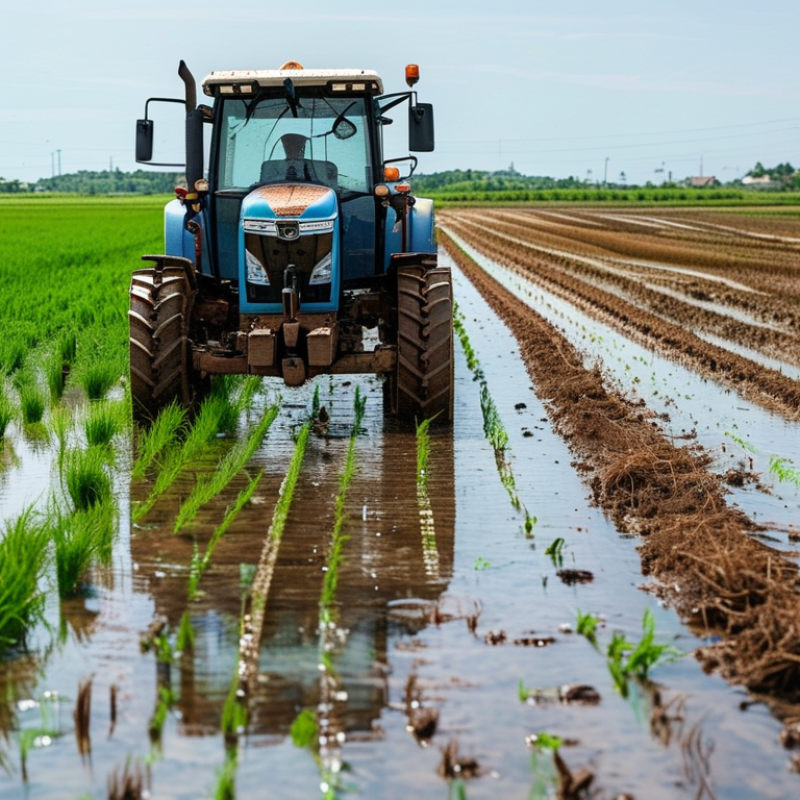
2026 Top Paddy Land Tractor Buying Guide for Global Buyers

Paddy Land Tractor Types and Their Agricultural Applications

Paddy fields demand different tractor choices from dry farmland. Walking tractors suit small plots, narrow bunds, and light puddling work. Their low weight reduces sinking, although operators may work longer hours. Compact four-wheel tractors provide better traction for tillage, rotary harrowing, trailer hauling, and pump operation. Crawler tractors perform well in deep mud, where wheels lose grip. They cost more and require careful undercarriage maintenance.

According to FAO’s Agricultural Production Statistics, global rice production remains above 500 million tonnes annually, supporting intense demand for timely field preparation. The IRRI Rice Knowledge Bank identifies puddling, leveling, transplanting, and drainage control as critical operations. A tractor should therefore match soil depth, plot size, and implement compatibility, not horsepower alone. In soft clay, wide tires or tracks can reduce rutting. In shallow water, excessive flotation may limit pulling force. Small detail. It changes the result.

The OECD-FAO Agricultural Outlook 2024–2033 expects continuing growth in global rice consumption, increasing pressure on farmers to shorten planting windows. Four-wheel models with adjustable tread widths fit mixed plots and transport tasks. Specialized paddy tractors are better for repeated wet-field work. Buyers should inspect axle seals, ground clearance, braking performance, and local repair access. A practical lesson is uncomfortable: a powerful tractor can damage a wet field faster. Test it after rainfall, with the intended rotary tiller attached. Specification sheets cannot show every rut.

Key Specifications for Wet-Field Tractor Performance

2026 Top Paddy Land Tractor Buying Guide for Global Buyers

Key Specifications for Wet-Field Tractor Performance

Wet-field work punishes weak traction and poor weight distribution. FAO reports that rice supplies over 20% of global human dietary energy. That scale makes field efficiency a serious purchasing issue. Choose four-wheel drive, preferably with equal-size wheels. It reduces front-end lift during puddling and trailer work. Traction matters more.

The OECD-FAO Agricultural Outlook 2024–2033 expects continued growth in global rice demand. Buyers should therefore examine more than engine horsepower. A practical range is 25–40 kW for common small and medium paddy implements. Confirm the manufacturer’s rated power at the PTO, not only engine output. Wet soil also requires wide agricultural tires, deep lugs, and adjustable ballast. Excessive ballast, however, can create deeper ruts and higher fuel use. A turning radius below 3.5 metres improves control near narrow bunds, but local soil conditions may change the result.

Hydraulic lift capacity should exceed the implement’s actual weight by at least 20%. Look for sealed wet clutches, corrosion-resistant wiring, and protected air intake systems. The FAO Rice Market Monitor highlights the importance of stable rice production under changing weather conditions. That supports dependable cooling and easy maintenance. Test the tractor in real mud before purchase. Do not guess. A clean specification sheet can still mislead when the tires spin, the lift overheats, or the operator cannot see the rear implement.

2026 Top Paddy Land Tractor Buying Guide for Global Buyers - Key Specifications for Wet-Field Tractor Performance

Indicative non-brand market specifications for new agricultural tractors intended for wet-field and paddy cultivation. Actual specifications vary by configuration, tire selection, soil condition, and local regulations.
Tractor Class Typical Rated Power Typical Engine Recommended Drive PTO Speed Hydraulic Lift Capacity Wet-Field Use
Compact 18–30 hp / 13–22 kW 1.0–1.5 L, 3-cylinder diesel 4WD preferred 540 rpm or economy PTO 600–1,000 kg Small plots, vegetable paddies, narrow bunds
Light Utility 31–45 hp / 23–34 kW 1.5–2.2 L, 3- or 4-cylinder diesel 4WD with differential lock 540 rpm; optional 540E 900–1,500 kg General paddy work, rotary tilling, trailer work
Mid-Range Utility 46–60 hp / 34–45 kW 2.2–3.5 L, 4-cylinder diesel Mechanical or electro-hydraulic 4WD 540 rpm; optional 540E/1,000 rpm 1,300–2,200 kg Medium fields, puddling, leveling, and transport
Heavy Utility 61–75 hp / 45–56 kW 3.0–4.5 L, 4-cylinder turbo diesel 4WD with wet-field tires 540/540E; 1,000 rpm often available 1,800–2,800 kg Deep mud, heavy rotary implements, and larger trailers
High-Power Paddy 76–95 hp / 57–71 kW 4.0–5.0 L, 4- or 6-cylinder turbo diesel 4WD with independent locking differentials 540/540E/1,000 rpm 2,400–3,800 kg Large fields, high draft loads, and multi-operation use
Performance Dimension Recommended Buying Range Why It Matters in Paddy Fields Practical Check Before Purchase
Drawbar traction 4WD; selectable or automatic differential lock Reduces wheel slip on saturated soil and improves pulling force. Test the tractor in wet soil with the intended implement.
Ground clearance 350–500 mm, depending on tire and axle design Helps prevent mud buildup and protects crops, ridges, and drainage channels. Measure the lowest fixed point, not only the axle housing.
Turning radius Approximately 2.5–4.5 m, depending on class A tighter turning circle improves headland efficiency and reduces bund damage. Check the turning radius with front-wheel drive engaged.
Transmission 8–24 forward speeds; creeper or shuttle option preferred Provides low-speed control for puddling, transplanting, and precise implement operation. Confirm the lowest working speed and reverse response.
PTO compatibility Independent 540 rpm; 540E useful for light-duty equipment Supports rotary tillers, pumps, mowers, threshers, and other common implements. Match PTO power and shaft speed to every planned implement.
Hydraulic performance 15–60 L/min auxiliary flow; 600–3,800 kg lift range Supports mounted tillers, leveling blades, loaders, and hydraulic steering systems. Verify lift capacity at the linkage ends and available hydraulic outlets.
Wet-field tires Agricultural lug tires, typically R1 or deep-lug wet-field pattern Improves self-cleaning, traction, and flotation compared with industrial tread designs. Check tire width, lug spacing, ballast limits, and local road requirements.
Operating weight 1,100–4,500 kg, excluding optional ballast More weight can improve traction, but excessive weight may cause rutting and soil compaction. Balance tractor weight with soil bearing capacity and transport limits.
Fuel capacity 25–180 L, depending on tractor class A larger tank reduces refueling interruptions during long field shifts. Compare tank volume with expected fuel consumption and local fuel quality.
Typical field speed 1.5–8 km/h for soil preparation; higher for transport Low speed maintains working depth and reduces implement bounce in soft soil. Confirm speed ranges at rated PTO speed and under load.
Indicative fuel use Approximately 4–18 L/h under heavy field load Helps estimate operating cost, daily range, and required fuel storage. Request test data using the same implement, soil, and engine load.
Emission compliance Select the applicable local stage or tier certification Ensures legal import, registration, operation, and future resale in the target market. Verify engine certificates, serial-number documentation, and fuel requirements.
Buyer note: For most wet-field applications, prioritize 4WD traction, differential locking, suitable lug tires, low-speed transmission control, adequate hydraulic lift, and sufficient ground clearance before choosing maximum engine power.

How to Match Tractor Features with Farm Conditions

2026 Top Paddy Land Tractor Buying Guide for Global Buyers

Matching a tractor to paddy conditions starts with soil, not horsepower. FAO AQUASTAT reports that agriculture uses about 70% of global freshwater withdrawals, making traction and fuel efficiency important in wet fields. Measure water depth, soil firmness, field size, and turning space before comparing models. A 45–60 horsepower tractor may suit small plots, while deeper mud demands stronger torque and suitable ballast.

Puddled soil needs wide agricultural tires, reliable differential locking, and enough ground clearance. Narrow tires can sink quickly, even with adequate engine power. Four-wheel drive improves grip on soft, uneven surfaces, but it can increase maintenance and fuel use. Check the turning radius near bunds. Small details matter.

PTO speed should match pumps, tillers, and threshing equipment. Select hydraulic lift capacity according to the heaviest implement, not the average tool. The OECD-FAO Agricultural Outlook 2024–2033 expects continued growth in mechanized agricultural demand across developing markets, but local service access remains uneven. A technically impressive tractor may become expensive downtime without nearby parts and trained technicians. This is often overlooked.

Do not trust horsepower alone. Test the tractor in wet soil, if possible. Ask for fuel-use records under similar loads. The World Bank notes that smallholders often face limited access to finance and machinery services, so flexible maintenance costs deserve equal attention. My own assessment would remain cautious: soil tests and operator feedback can challenge the original purchase plan.

Global Buying Factors: Price, Compliance, and Supplier Selection

2026 Top Paddy Land Tractor Buying Guide for Global Buyers

Global Buying Factors: Price, Compliance, and Supplier Selection

Buying a paddy land tractor requires more than comparing online prices. Mud depth, field size, tire design, and engine power affect real operating costs. A lower purchase price may hide expensive shipping, spare parts, training, or seasonal repairs. Calculate the landed cost, including freight, import duties, local taxes, and maintenance for three years. This is where many budgets fail.

Compliance must be checked before payment. Confirm emission limits, noise rules, lighting requirements, rollover protection, and PTO guarding. Ask for machine manuals, test reports, warranty terms, and conformity documents. Regulations differ between countries and sometimes between regions. Do not rely on verbal promises. Written evidence is safer. Still, paperwork does not replace a field test.

Tips: Request a demonstration in wet soil. Check turning control, traction, fuel use, and hydraulic response. Ask whether common filters and belts are locally available. Contact two recent customers, not only references selected by the supplier. A capable supplier should explain limitations honestly, including delivery delays or unsuitable soil conditions. Compare service response times, technician training, parts stock, and warranty exclusions. An attractive offer becomes weak when support disappears after installation. Recheck every assumption before signing; practical conditions often differ from the sales sheet.

Inspection, Delivery, Maintenance, and Ownership Planning

2026 Top Paddy Land Tractor Buying Guide for Global Buyers

Inspection, Delivery, Maintenance, and Ownership Planning

A paddy field tractor must handle standing water, soft soil, and narrow raised paths. Inspect the four-wheel drive system before discussing price. Check tire lugs for even wear, and examine the axles for oil leaks. The engine should start without excessive smoke after sitting overnight. Listen for knocking, uneven idle, or delayed throttle response. Test the clutch, brakes, steering, and hydraulic lift under load. Small faults become expensive in remote farming areas.

Delivery planning deserves the same attention. Confirm the tractor’s final dimensions, shipping weight, and unloading requirements. Measure farm gates, bridge widths, and storage entrances. Request a written list of included tools, filters, manuals, and spare parts. Take photographs before loading and during arrival inspection. This record can support a fair claim if transport damage appears. My first delivery checklist was too short. I missed the battery condition, and the machine lost several working days.

Ownership costs extend beyond fuel. Set a seasonal maintenance schedule for engine oil, coolant, air filters, transmission fluid, and hydraulic connections. Clean mud from the chassis after every wet-field operation. Store the tractor under a roof with dry ventilation. Keep service records with dates, operating hours, and replaced parts. Train operators to avoid sudden turns in deep mud. A lower purchase price may hide higher downtime. Recheck the plan after one harvest. Soil conditions, operator habits, and local repair access often change the original estimate.

2026 Top Paddy Land Tractor Buying Guide: Common Service Checkpoints

The chart shows commonly used engine-hour planning points for inspection and maintenance of agricultural tractors used in wet and muddy paddy-field conditions. Exact intervals should always be confirmed in the tractor’s operating manual.

  • Complete a pre-delivery inspection before acceptance, including engine fluids, cooling system, transmission, hydraulics, tires, lighting, safety controls, and supplied implements.
  • Perform operator checks before each working day and clean mud from the radiator screen, axles, linkage, and underbody after wet-field operation.
  • Use the first-service checkpoint at approximately 50 engine hours for fluid, filter, fastener, belt, and adjustment checks.
  • Plan periodic servicing around 250 engine hours, with deeper transmission, hydraulic, brake, and electrical inspections at approximately 500 hours.
  • Before long-term storage, wash and dry the tractor, protect exposed metal, check coolant and fuel systems, lubricate grease points, and store it under cover.
Go to Top