2026 Top High Flow Pumps for Global Buyers?

Global buyers entering 2026 face a crowded market for high-capacity water and fluid-handling equipment. A High Flow Pump may promise impressive output, yet its real performance depends on head pressure, fluid temperature, viscosity, and installation conditions. This guide examines leading pump types for industrial, municipal, agricultural, construction, and emergency water applications. It focuses on practical selection rather than attractive catalog figures.

Field experience shows that rated flow often changes after long pipe runs, narrow valves, or dirty intake screens. Small details matter. A pump moving 1,000 cubic meters per hour may perform poorly with excessive suction lift or inadequate power. We consider efficiency, materials, maintenance access, noise, control systems, spare parts, and verified operating curves. Independent certifications and documented testing also deserve attention, especially when buyers compare suppliers across different regions.

The following overview is designed to support informed purchasing decisions in 2026. It compares centrifugal, axial-flow, mixed-flow, submersible, and diesel-driven solutions against realistic operating needs. Manufacturer reputation matters, but transparent specifications matter more. Buyers should request test reports, warranty terms, energy data, and service support before placing an order. No single model fits every site. That is the uncomfortable truth.

Some recommendations may require further verification because product availability, regional standards, and supplier capabilities can change quickly. Treat performance claims carefully. A reliable choice balances flow, pressure, lifecycle cost, safety, and local technical support. The strongest pump is not always the largest one; it is the one that performs consistently when conditions become difficult.
2026 Top High Flow Pumps for Global Buyers?

What Are High Flow Pumps and How Do They Work?

High flow pumps move large volumes of liquid within a short time. They are common in water treatment, irrigation, cooling systems, drainage, and industrial transfer lines. Unlike small transfer pumps, they prioritize volume capacity, stable pressure, and reliable operation under continuous demand.

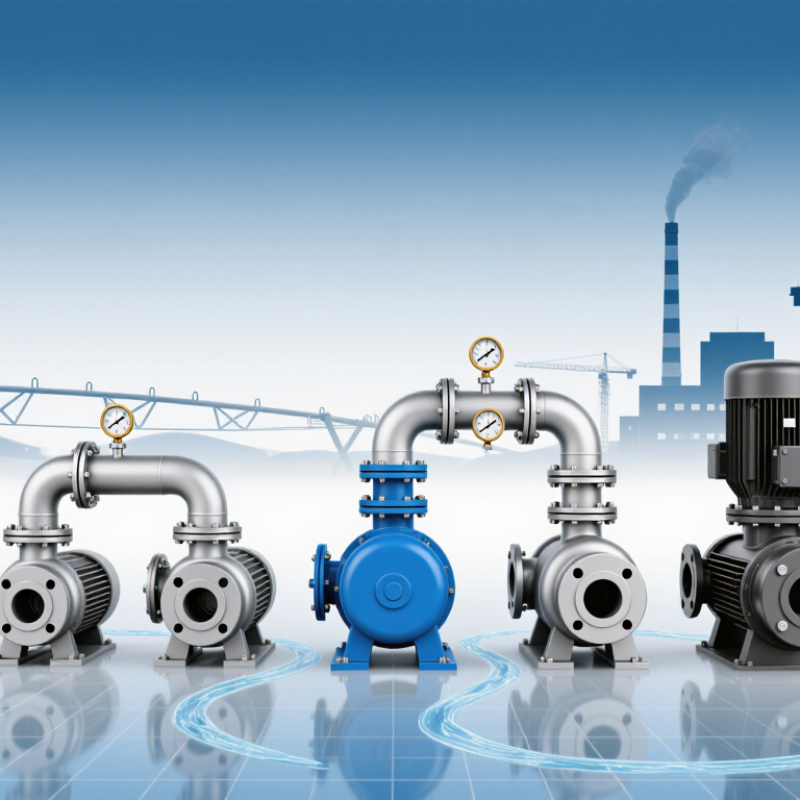
Most high flow systems use centrifugal action. An electric motor spins an impeller inside a shaped casing. The impeller adds velocity to the liquid, while the casing converts that velocity into pressure. Liquid enters through the suction side and leaves through the discharge outlet. Larger impellers usually increase flow, but they can also raise power consumption. Positive displacement pumps work differently. They trap a fixed liquid volume and push it forward, making them useful when steady pressure matters more than maximum volume.

Real installations are less tidy than diagrams. Long suction pipes, narrow valves, air leaks, or dirty strainers can reduce performance sharply. Cavitation may sound like gravel inside the pump. It can damage the impeller over time. Tips: Check the required flow, pressure, liquid temperature, pipe size, and power supply before choosing equipment. Leave practical safety margins, but avoid oversizing blindly. A pump running far from its best efficiency point may waste energy and suffer early wear. Testing actual flow after installation is valuable, because initial calculations are sometimes too optimistic.

2026 Top High Flow Pumps for Global Buyers? - What Are High Flow Pumps and How Do They Work?

Typical engineering ranges for water and other low-viscosity liquids. Actual performance depends on pump design, liquid properties, system resistance, installation, and operating speed.
Pump Type How It Works Typical Flow Range
(m³/h)
Typical Head
(m)
Typical Efficiency
(%)
Best-Fit Applications Key Buying Considerations
Axial-Flow Pump A propeller produces mostly parallel fluid movement along the shaft axis. It is designed for very high flow with relatively low head. 500–100,000 2–30 70–90 Flood control, drainage, irrigation, cooling-water circulation, stormwater management Low static head, large intake capacity, submergence requirements, debris handling, cavitation protection
Mixed-Flow Pump The impeller combines radial and axial velocity components, producing more head than an axial-flow pump while maintaining high flow capacity. 100–20,000 10–80 75–90 Municipal water transfer, irrigation networks, aquaculture, cooling systems, drainage stations Required head, wet-well geometry, impeller diameter, motor speed, solids content, operating point stability
Horizontal Split-Case Centrifugal Pump A rotating impeller increases fluid velocity; the casing converts part of that velocity into pressure. The split casing allows easier maintenance. 100–10,000 20–200 75–90 Water treatment, fire-water systems, district cooling, industrial circulation, building services Duty and standby arrangement, suction conditions, seal configuration, service access, motor efficiency, spare-part availability
Vertical Turbine Pump A vertical shaft drives one or more submerged impellers. Multiple stages can be added when higher discharge pressure is required. 100–20,000 30–300 70–88 Deep wells, raw-water intake, irrigation, municipal supply, industrial process water Well diameter, water level variation, shaft alignment, column length, lubrication method, installation depth
Submersible Sewage Pump The motor and pump are installed in the liquid. The impeller transfers energy to the wastewater while the submersible housing provides cooling. 20–2,000 5–80 50–82 Wastewater lift stations, stormwater, municipal sewage, construction-site dewatering Free passage, solids size, clog resistance, cable length, motor protection, lifting system, corrosion resistance
End-Suction Centrifugal Pump A single impeller draws liquid axially into the eye and discharges it radially through the casing. It is widely used for general-purpose transfer. 10–1,000 10–150 60–88 General water transfer, HVAC, process cooling, pressure boosting, agricultural systems Flow-head curve, suction lift, NPSH margin, seal materials, motor power, pipe-size compatibility
Axial- or Mixed-Flow Vertical Pump A vertical, bowl-type assembly uses submerged impellers and a long shaft to move large liquid volumes from a sump, intake, or wet well. 500–50,000 5–100 70–90 Large intake stations, flood control, irrigation canals, power-plant circulating water Wet-well dimensions, vertical clearance, shaft design, vibration control, intake hydraulics, maintenance access
Twin-Screw or Progressive-Cavity Pump Positive-displacement elements trap fixed volumes of liquid and move them continuously from suction to discharge, making flow less dependent on pressure. 5–500 10–150 40–80 Sludge, viscous liquids, food processing, chemical transfer, metering and dosing duties Viscosity, solids concentration, dry-running risk, pressure relief, pulsation, elastomer and material compatibility
High-flow pump selection note: A high-flow pump is generally selected to move a large liquid volume per unit of time, but “high flow” has no single universal threshold. Buyers should compare the duty point, including required flow, total dynamic head, liquid temperature, viscosity, solids content, suction conditions, motor power, efficiency, and lifecycle cost.
Unit reference: 1 m³/h is approximately 4.40 US gallons per minute (US gpm). Pump curves and certified test data should be requested before final procurement.

Which High Flow Pump Types Will Lead the Global Market in 2026?

Centrifugal pumps are likely to lead the global high-flow market in 2026. MarketsandMarkets identifies centrifugal technology as the largest pump segment, supported by water supply, cooling, irrigation, and process industries. Their simple structure moves large volumes continuously. Split-case designs suit municipal stations, while end-suction models fit smaller industrial systems. The choice is practical, not glamorous.

Submersible pumps should gain attention in wastewater and flood-control projects. The United Nations World Water Development Report 2024 states that agriculture accounts for about 70% of global freshwater withdrawals. This supports demand for high-flow irrigation pumps, especially axial-flow and mixed-flow models. Axial-flow pumps handle enormous volumes at low heads. Mixed-flow pumps offer a useful compromise when pressure conditions change.

Energy performance will shape purchasing decisions. The U.S. Department of Energy reports that pumping systems can consume 25% to 50% of industrial facility electricity. Buyers will therefore examine hydraulic efficiency, variable-speed control, maintenance access, and lifecycle cost. High flow alone is not enough. A large pump running far from its best efficiency point wastes power and shortens service life. I have seen specifications prioritize capacity while ignoring suction conditions. That mistake remains common. In 2026, centrifugal pumps may lead sales, but efficient submersible, axial-flow, and mixed-flow systems could lead project value.

How to Compare Flow Rate, Pressure, Efficiency, and Materials

2026 Top High Flow Pumps for Global Buyers?

Comparing a high-flow pump starts with the duty point, not the catalogue maximum. Record required flow, total dynamic head, fluid temperature, and operating hours. A pump rated at 1,000 m³/h may deliver far less at your actual pressure.

The U.S. Department of Energy reports that pumping systems can represent about 25% of industrial electricity consumption. Efficiency deserves close testing. Compare wire-to-water efficiency, not only hydraulic efficiency. Check the full curve, motor loading, variable-speed range, and efficiency at normal demand. Oversizing often creates throttling losses. It looks safer, but it can waste power every hour. The International Energy Agency also identifies motor-driven systems as major global electricity users, making small efficiency differences financially important.

Materials should match chemistry, solids, temperature, and corrosion exposure. Stainless steel may resist chlorides, but material grade and concentration still matter. Cast iron can suit clean water, yet abrasive slurry may demand hardened components. Ask for standards-based performance data, factory test tolerances, and NPSH requirements. ANSI/HI standards provide useful guidance for pump testing and suction conditions. Field experience suggests installation quality can defeat an excellent pump. Poor alignment, undersized suction piping, or air leaks can reduce flow quickly. My comparison method is not perfect; real fluids change, and published curves need verification under site conditions.

2026 Top High Flow Pumps for Global Buyers

How to compare flow rate, pressure, efficiency, and materials

Pump configuration Representative flow rate Typical pressure Hydraulic efficiency Common wetted materials
Axial-flow pump 20,000 m³/h 1–3 bar 80–88% Cast iron or coated steel casing; stainless steel or bronze impeller
Mixed-flow pump 12,000 m³/h 3–8 bar 78–88% Ductile iron, cast steel, stainless steel, or bronze
Double-suction split-case pump 8,000 m³/h 4–12 bar 80–90% Cast iron or ductile iron casing; bronze or stainless steel impeller
Vertical turbine pump 6,000 m³/h 5–20 bar 75–88% Carbon steel, cast iron, stainless steel, or duplex stainless steel
End-suction centrifugal pump 2,500 m³/h 3–16 bar 70–85% Cast iron, ductile iron, stainless steel, or engineered alloys

These are representative operating-point benchmarks drawn from commonly used industrial pump ranges, not brand-specific claims. Buyers should compare the complete duty point—flow, pressure, fluid temperature, solids content, NPSH, motor input, and materials compatibility—before selecting a pump.

What Applications and Industries Need High Flow Pumps?

High flow pumps serve systems where moving large volumes matters more than extreme pressure. Municipal water plants use them for raw-water intake, filtration, and reservoir transfer. The 2024 United Nations World Water Development Report states that agriculture accounts for roughly 70% of global freshwater withdrawals. Irrigation therefore remains a major application, especially across large fields, canals, and greenhouse networks. Flow must stay stable across long pipelines. Small design errors can waste substantial energy.

Mining operations use high flow pumps to move water, tailings, and abrasive slurry. Construction sites rely on them for dewatering pits, tunnels, and foundations. Power stations and industrial facilities also need them for cooling-water circulation. The U.S. Department of Energy identifies pumping systems as a significant industrial electricity user, so efficiency deserves careful attention. Buyers should compare total dynamic head, solids size, corrosion resistance, NPSH, and expected duty cycles. A stainless impeller may suit clean water, but abrasive slurry demands tougher materials. That detail is often missed.

Fire protection, flood control, aquaculture, and wastewater treatment create different operating demands. Wastewater pumps may need wide passages to reduce clogging. Flood pumps require rapid deployment and dependable operation around mud and debris. Variable-speed control can reduce throttling losses, but it is not automatically the best choice. Field measurements matter. Design assumptions can be wrong. Record actual flow, pressure, liquid temperature, and seasonal changes before selecting equipment.

How Should Global Buyers Select Suppliers and Manage Purchasing Risks?

2026 Top High Flow Pumps for Global Buyers?

How Should Global Buyers Select Suppliers and Manage Purchasing Risks?

High-flow pump purchasing should begin with verified operating data, not attractive catalog images. Global buyers should confirm flow rate, total head, fluid temperature, viscosity, solids content, and daily operating hours. These details determine impeller design, motor capacity, seal selection, and expected energy use. Do not trust estimates alone.

Ask suppliers for performance curves, material certificates, inspection records, and recent factory test results. Request a witnessed factory acceptance test when the order is critical. An independent inspection can check dimensions, vibration, electrical safety, and packaging before shipment. Technical fit matters, but documentation reveals supplier discipline. A perfect spreadsheet can still hide weak production control.

During supplier evaluation, review manufacturing capacity, quality procedures, export experience, spare-parts availability, and warranty terms. A video call is useful, but a site audit gives stronger evidence. Look for organized assembly areas, traceable components, calibrated instruments, and pressure-test records. Small details matter. Use staged payments linked to design approval, testing, and shipping documents. Specify delivery terms, insurance responsibilities, installation support, and remedies for delays in writing. Consider currency changes, port congestion, and local service limitations. A cheap purchase may become expensive after one failed seal or delayed spare part. One uncomfortable issue remains: buyers sometimes approve suppliers before finalizing their own specifications. That mistake creates disputes later. Leave room for technical review, but control every change through signed records.

Go to Top