
2026 Best Plunger Pump Manufacturers for Global Buyers
Choosing the right Plunger Pump manufacturer in 2026 requires more than comparing catalog prices. Global buyers need dependable equipment, verified performance, and practical support after delivery. A pump may look impressive on paper, yet fail when abrasive fluids, temperature changes, or unstable power supplies affect daily operation.
This guide examines leading Plunger Pump manufacturers through engineering experience, product quality, and international service capabilities. It considers pressure ranges, flow stability, plunger materials, seal design, corrosion resistance, and maintenance access. These details matter on a real production floor, where a leaking seal can stop a line and delay several teams.
Specifications tell only part of the story. Manufacturer documentation, testing procedures, certifications, spare-part availability, and technical communication also deserve careful review. Buyers should request application data, warranty terms, installation guidance, and references from comparable industries. A supplier that answers clearly is often easier to trust.
No ranking can suit every project. That is worth remembering. A chemical processor may value alloy construction, while a water-treatment contractor may prioritize service speed and lifecycle cost. Some manufacturers publish limited field data, making direct comparisons imperfect. Buyers should verify claims independently and avoid selecting equipment based only on brand reputation.
The following overview highlights manufacturers that deserve attention from global buyers. It also points out practical limitations, because reliable purchasing depends on honest evaluation rather than polished marketing. Performance in the field remains the real test.
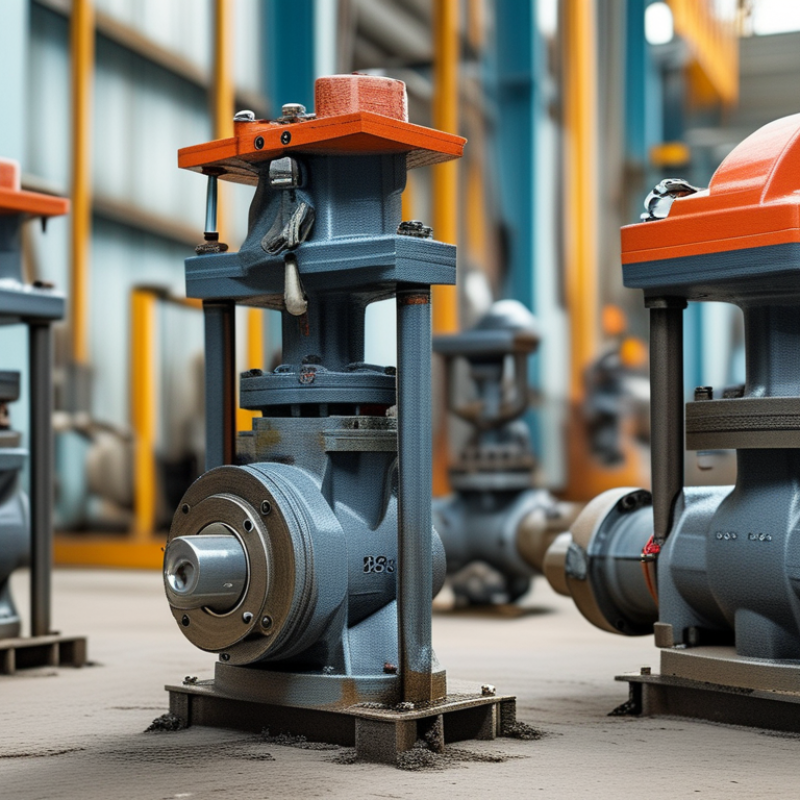
What Is a Plunger Pump and How Does It Work?
A plunger pump is a reciprocating positive-displacement pump. It moves liquid through a sealed chamber, one stroke at a time. A motor drives a crank, connecting rod, or hydraulic actuator. The plunger then travels inside a stationary packing or seal. During the return stroke, suction valves open and fill the chamber. During the forward stroke, discharge valves open and force liquid into the pipeline. Flow depends mainly on plunger diameter, stroke length, and speed. Pressure can remain high even at low flow, which makes this design suitable for water treatment, chemical dosing, pressure testing, and oilfield service.
The U.S. Department of Energy reports that pumping systems may consume 25% to 50% of electricity in some industrial facilities. This explains why buyers should examine efficiency beyond the motor label. A 2024 Hydraulic Institute technical guidance also stresses system-based pump assessment, including friction losses, control methods, and operating points. The simple picture is useful, but incomplete. Poorly selected valves, abrasive particles, or inadequate lubrication can quickly damage packing and plungers. Pulsation may also shake small pipes like a loose metal ruler.
Tips: Check actual flow, pressure, liquid temperature, viscosity, and solids content before comparing manufacturers. Request pulsation data and seal-life evidence. A smaller pump is not always cheaper. Oversizing can create unstable operation and wasted power. Condition monitoring helps, but it cannot replace regular inspection.
2026 Best Plunger Pump Manufacturers for Global Buyers - What Is a Plunger Pump and How Does It Work?
| Evaluation Dimension | Single-Plunger Pump | Triplex Plunger Pump | Quintuplex Plunger Pump | Buyer Consideration |
|---|---|---|---|---|
| Basic Operating Principle | One reciprocating plunger draws fluid into the chamber and discharges it under pressure. | Three plungers operate with phase differences to reduce flow pulsation compared with a single-plunger design. | Five plungers provide smoother delivery and lower pulsation for demanding continuous-duty applications. | Confirm whether the supplier clearly documents suction, discharge, sealing, and lubrication arrangements. |
| Typical Pressure Capability | Suitable for low-to-high pressure service, depending on diameter, speed, materials, and design. | Commonly selected for high-pressure industrial, water-blasting, chemical, and process applications. | Often selected where high pressure, stable flow, and extended continuous operation are required. | Request a certified pressure rating, design pressure, test pressure, and allowable operating range rather than relying on a maximum headline figure. |
| Flow Characteristics | Strong pulsation; usually requires a pulsation dampener for sensitive downstream equipment. | Lower pulsation than a single-plunger pump, although a dampener may still be required. | Very smooth positive-displacement flow relative to simpler reciprocating configurations. | Check rated flow at the actual pressure, speed, fluid viscosity, and temperature. |
| Flow Control | Flow is mainly controlled by stroke length, operating speed, and pump displacement. | Flow can be adjusted through speed control, stroke adjustment, or a suitable variable-frequency drive. | Offers accurate metering when correctly sized and calibrated for the process. | Verify turndown ratio, minimum stable speed, control accuracy, and calibration procedure. |
| Common Applications | Small-scale dosing, testing systems, pressure generation, and specialty equipment. | Water treatment, reverse-osmosis feed, high-pressure cleaning, boiler feed, and industrial chemical injection. | Oil and gas service, mining, process industries, high-pressure water systems, and demanding chemical duties. | Match the pump to the fluid, duty cycle, required flow stability, installation environment, and maintenance resources. |
| Fluid Compatibility | Material selection is critical when handling corrosive, abrasive, toxic, or high-temperature fluids. | Can be configured with corrosion-resistant wet-end components and application-specific packing. | Suitable for complex duties when seals, valves, plungers, and liquid-end materials are properly engineered. | Provide fluid composition, solids content, viscosity, temperature, vapor pressure, and chemical compatibility data. |
| Solids Handling | Generally less tolerant of abrasive solids unless specifically designed for them. | May handle limited suspended solids with suitable valves, materials, filtration, and lower operating speed. | Can be configured for challenging fluids, but abrasive service increases wear and maintenance demands. | Confirm maximum particle size, concentration, hardness, filtration requirements, and expected wear-part life. |
| Efficiency | Positive-displacement operation can provide high volumetric efficiency when properly sized and maintained. | Typically provides a practical balance between efficiency, smoothness, size, and cost. | Can provide efficient high-pressure service, but power demand and package size may be greater. | Ask for efficiency data at the intended operating point, not only at the best-efficiency condition. |
| Maintenance Requirements | Fewer moving parts, but packing, valves, and seals still require inspection and replacement. | Requires scheduled inspection of packing, valves, plungers, bearings, lubrication, and dampeners. | More components can increase preventive-maintenance planning and spare-parts requirements. | Evaluate service intervals, spare-parts availability, maintenance access, manuals, and remote technical support. |
| Installation Requirements | Usually simpler, but the foundation and piping must still accommodate vibration and pressure pulsation. | Requires correctly sized suction piping, adequate inlet conditions, alignment, and pulsation control. | May require a stronger baseplate, larger driver, more robust piping, and additional safety instrumentation. | Request GA drawings, nozzle loads, foundation data, driver information, and installation instructions. |
| Key Safety Features | Pressure relief protection is essential because positive-displacement pumps can continue building pressure against a blocked discharge. | Typically requires relief valves, pressure monitoring, suitable isolation valves, and protection against dry running. | May require integrated shutdowns, high-pressure protection, leak detection, and process-specific safeguards. | Confirm compliance with applicable local regulations, pressure-vessel requirements, electrical standards, and site safety rules. |
| Best Selection Criteria | Choose when simplicity, compactness, and intermittent or specialized operation are priorities. | Choose when a broad balance of pressure capability, smooth flow, efficiency, and serviceability is needed. | Choose when continuous high-pressure operation and low pulsation are more important than minimum package cost. | Compare total cost of ownership, validated performance, lifecycle support, delivery capability, and documentation quality. |
Related Posts
-
2026 Best Plunger Pump Reviews and Buying Guide?
-

Essential Tips for Choosing the Right Plunger Pump for Your Needs
-
Why Choose a Plunger Pump for Your Application Needs?
-
What is a Plunger Pump and How Does it Work?
-
China Top High Pressure Chemical Pump Manufacturers and Innovations?
-
Discover the Best High Pressure Pump Options in China for Your Needs?