10 Best High Flow Hydraulic Pumps for Global Buyers?
Choosing the right High Flow Hydraulic Pump is rarely a simple horsepower comparison. Global buyers face different pressures, including energy costs, fluid temperatures, service access, and regional standards. A pump that performs well on a quarry loader may struggle in a compact injection machine.
Industry forecasts show continued demand for hydraulic equipment. MarketsandMarkets estimates that the global hydraulic equipment market will reach more than USD 50 billion by 2028. Grand View Research also identifies construction, agriculture, and material handling as major growth areas. These reports provide useful direction, but market projections are not purchase specifications. Real performance depends on duty cycle, contamination control, inlet conditions, and operator habits.
Dr. Steffen Haack, CEO of Bosch Rexroth, has said, “Hydraulics will remain an important technology for many applications.” That view deserves practical testing. High flow does not automatically mean higher productivity. Poorly matched displacement can increase heat, noise, and maintenance costs. I have seen impressive catalog figures become disappointing results when suction piping was too narrow.
This guide reviews ten High Flow Hydraulic Pump options for international buyers. It considers flow stability, pressure capability, efficiency, control response, installation flexibility, and after-sales support. Manufacturer data matters. Field evidence matters more.
Some comparisons remain imperfect. Published efficiency values often use different test conditions, making direct rankings difficult. Buyers should request curves, inlet limits, warranty terms, and regional service details before ordering. The strongest choice is not always the largest pump. It is the unit that delivers reliable flow without punishing the rest of the hydraulic circuit.
Define High-Flow Criteria: 100–1,000+ L/min, 250–420 bar, and 90% Efficiency
A high-flow hydraulic pump should be judged against operating data, not catalog size. For this buyer guide, high flow means 100–1,000+ L/min, with pressure from 250 to 420 bar. At 1,000 L/min and 420 bar, hydraulic output reaches about 700 kW. That figure exposes weak motors, undersized lines, and poor cooling quickly.
The target is near 90% total efficiency, not only volumetric efficiency. ISO 4409:2019 provides test methods for hydraulic pump performance, while ISO 4413 addresses system safety and energy-related design. The U.S. Department of Energy’s industrial pumping guidance also stresses system-level assessment. Field measurements matter more than laboratory claims. Record flow, pressure, input power, oil temperature, and leakage under real duty cycles. A pump reaching 90% briefly may perform poorly after hours at 400 bar.
Tips: Match displacement to demand, then verify control losses. Keep suction velocity conservative and filtration carefully monitored. Clean oil helps, but it cannot repair bad sizing. According to ISO 4406 cleanliness reporting, particle codes should be specified with the pump and valve requirements. I would also question any “90% efficient” claim without test conditions. Efficiency changes with viscosity, speed, pressure, and temperature. That is the uncomfortable detail buyers often miss.
10 Best High Flow Hydraulic Pumps for Global Buyers? - Define High-Flow Criteria: 100–1,000+ L/min, 250–420 bar, and 90% Efficiency
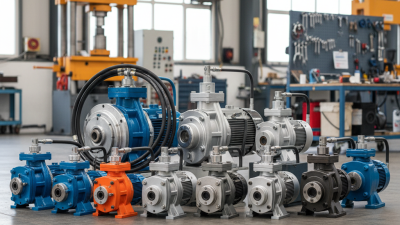
Representative high-flow hydraulic pump configurations. Performance depends on displacement, speed, fluid viscosity, temperature, inlet conditions, and system design. Confirm final ratings with the pump supplier before selection.
| No. |
Pump Configuration |
Displacement Range |
Typical Flow Range |
Continuous Pressure |
Peak Pressure |
Typical Speed |
Total Efficiency |
Approx. Hydraulic Power at Rated Point |
Best-Fit Applications |
Selection Notes |
| 1 |
Large Axial-Piston Variable Pump |
250–560 cm³/rev |
300–1,000 L/min |
315–350 bar |
400–420 bar |
800–2,000 rpm |
90–94% |
175–2,450 kW |
Steel mills, marine winches, large presses, mobile cranes |
High power density and variable displacement; requires clean fluid and careful inlet sizing. |
| 2 |
Medium/Large Axial-Piston Fixed Pump |
160–500 cm³/rev |
200–900 L/min |
315–400 bar |
420 bar |
600–1,800 rpm |
90–93% |
105–2,520 kW |
Hydraulic power units, offshore equipment, injection systems |
Suitable for steady high-flow duty; use a relief or unloading circuit for variable demand. |
| 3 |
Tandem Axial-Piston Pump |
2 × 100–2 × 250 cm³/rev |
250–850 L/min |
280–350 bar |
400 bar |
800–1,800 rpm |
90–93% |
117–1,983 kW |
Multi-function mobile machinery, large excavators, drilling rigs |
Two independent circuits can improve control; combined flow requires compatible shaft torque. |
| 4 |
Large External-Gear Pump |
80–250 cm³/rev |
120–450 L/min |
250–315 bar |
350 bar |
500–2,000 rpm |
88–92% |
50–236 kW |
Material handling, lubrication systems, compact industrial power units |
Cost-effective and robust; noise, pulsation, and efficiency are generally less favorable than piston designs. |
| 5 |
Multi-Section Gear Pump Assembly |
2–4 sections, 40–160 cm³/rev each |
180–600 L/min combined |
250–300 bar |
330 bar |
700–2,000 rpm |
88–91% |
75–295 kW |
Agricultural machinery, refuse trucks, municipal equipment |
Provides multiple outlet flows from one drive; verify section pressure ratings and torque limits. |
| 6 |
Large Bent-Axis Piston Pump |
200–500 cm³/rev |
250–950 L/min |
315–350 bar |
400 bar |
500–1,500 rpm |
90–94% |
131–2,217 kW |
Marine propulsion auxiliaries, winches, heavy-duty industrial drives |
High starting torque and durable construction; installation envelope is usually larger. |
| 7 |
Variable-Displacement Swash-Plate Pump |
100–350 cm³/rev |
150–700 L/min |
280–350 bar |
400 bar |
800–2,200 rpm |
90–93% |
70–1,633 kW |
Plastic machinery, presses, test benches, automated production lines |
Good energy performance under variable load when paired with pressure-flow compensation. |
| 8 |
High-Pressure Screw Pump |
80–300 cm³/rev |
100–500 L/min |
250–315 bar |
350 bar |
600–1,800 rpm |
88–92% |
42–263 kW |
Low-noise industrial systems, marine hydraulics, continuous-duty power units |
Low flow ripple and quiet operation; select fluid viscosity carefully during cold starts. |
| 9 |
Electro-Hydraulic Variable Pump Unit |
100–300 cm³/rev |
100–600 L/min |
250–350 bar |
400 bar |
500–1,800 rpm |
89–93% |
42–350 kW |
Digital hydraulic controls, energy-saving presses, automated test equipment |
Enables precise pressure and flow control; requires compatible sensors, drive electronics, and software. |
| 10 |
Parallel Pump Bank |
2–6 pumps, 50–200 cm³/rev each |
300–1,200+ L/min |
250–350 bar |
400 bar |
600–1,800 rpm |
89–93% |
125–2,520 kW |
Large presses, foundry equipment, offshore systems, centralized power units |
Scalable and serviceable; manifold design, flow balancing, synchronization, and redundancy are essential. |
Technical note: Hydraulic power is estimated as P = Q × p ÷ 600, where P is in kW, Q is in L/min, and p is in bar. The listed efficiency values represent typical total pump efficiency near the rated operating point, not guaranteed performance across the complete speed and pressure range.
Compare Pump Technologies: Axial-Piston, Radial-Piston, Gear, and Vane Designs
Choosing among the 10 best high flow hydraulic pumps requires more than comparing catalog flow rates. Axial-piston pumps suit demanding systems with high pressure and variable flow. Their swash-plate control can improve energy use, but maintenance requires trained technicians. Radial-piston pumps deliver strong pressure at low speed. They are rugged, although often heavier and less compact.
Gear pumps remain attractive for simple, cost-sensitive equipment. Their design handles contamination better, but flow output usually follows shaft speed. Vane pumps operate quietly and provide smooth delivery. They can perform well in moderate-pressure circuits, yet dirty oil may damage their sliding components. Real machines are messier than catalogs. I would not choose a pump from pressure ratings alone.
Tips: Check required flow, working pressure, speed, fluid viscosity, and temperature together. Ask for verified performance curves, not only maximum figures. Inspect the reservoir, filtration, hose sizes, and relief-valve settings before selecting a pump. A high-flow unit can create heat when piping is restrictive. Leave a sensible safety margin, but avoid excessive sizing. It wastes power. Field testing under normal load can reveal noise, pressure ripple, and temperature rise. One overlooked detail is service access; a compact pump may become expensive when technicians cannot reach its connections.
10 High-Flow Hydraulic Pump Configurations for Global Buyers
The chart compares representative continuous-flow capacity and pressure capability across axial-piston, radial-piston, gear, and vane pump designs. Values are engineering reference points for commonly available industrial configurations; actual performance depends on displacement, speed, fluid viscosity, temperature, and system design.
Axial-piston pumps generally provide the best combination of high pressure, variable displacement, and efficiency. Gear pumps are often selected for economical high-flow systems, while radial-piston pumps suit high-pressure applications. Vane pumps offer smooth flow and low noise but typically operate at lower pressure levels.
Evaluate the 10 Models Using ISO 4413, ISO 4406, Duty Cycle, and MTBF
When comparing ten high-flow hydraulic pumps, I would start with ISO 4413, not catalogue flow rates. The standard requires controlled pressure, safe hose routing, guarding, and documented risk reduction. Each model should also be checked against ISO 4406 cleanliness targets. A pump delivering 600 L/min may still fail early if particles enter through a poorly sealed reservoir.
The U.S. Department of Energy reports that pumping systems can consume a substantial share of industrial electricity, sometimes exceeding 25 percent in energy-intensive facilities. That makes duty cycle important. I would test every model at continuous, intermittent, and peak loads, recording temperature, vibration, leakage, and absorbed power. Short tests can deceive. Real duty conditions are harsher.
MTBF deserves careful criticism. It is usually a calculated reliability estimate, not a promise from field experience. The ten models should therefore be ranked using service records, failed-unit analysis, and operating hours under comparable loads. ISO 4406 results should be logged beside filter changes and oil sampling data. A clean sample is useful evidence, but one sample is not proof.
A practical scorecard might assign 30 percent to ISO 4413 compliance, 25 percent to contamination tolerance, 25 percent to duty-cycle performance, and 20 percent to verified MTBF. I would keep the scoring transparent, even when the results look inconvenient. A quieter pump may consume more power. A high MTBF claim may hide limited testing. Industry reliability reports repeatedly show that maintenance conditions strongly influence rotating-equipment life, so laboratory figures need field context.
Match Global Applications: Mobile, Industrial, Marine, and 1,000+ L/min Systems
For global buyers, the ten best high-flow hydraulic pumps are not simply the largest units. They must match the application, duty cycle, pressure, and fluid conditions. Mobile equipment needs compact pumps, fast response, and strong tolerance for vibration. Industrial systems usually prioritize continuous operation, service access, and stable flow control. Marine installations demand corrosion-resistant materials, sealed connections, and careful approval checks. Different risks apply.
At 1,000 L/min, every design decision becomes expensive. At 250 bar, the theoretical hydraulic power reaches about 417 kW before efficiency losses. Heat rises quickly when valves throttle excess flow.
The U.S. Department of Energy’s Improving Pumping System Performance guide reports that pumping systems can represent roughly 25% of industrial electricity use. That figure supports serious attention to displacement control, filtration, pipe sizing, and standby losses. It is not a perfect comparison for every hydraulic circuit.
The IEA’s Energy Efficiency 2023 report places industry at about 37% of global final energy demand. Buyers should therefore compare total operating energy, not only purchase price. For mobile duty, load-sensing control may reduce wasted flow. For continuous industrial work, a multi-pump arrangement can improve redundancy. Marine users should verify oil compatibility and maintenance access near wet, confined spaces. Flow ratings also need context: maximum flow, rated flow, and flow at working pressure are different values. No selection is perfect. I would still request field data, because catalogue ratings can hide temperature, altitude, and contamination limits.
Rank Total Cost by Energy Consumption, Service Intervals, Warranty, and Support
Choosing the ten best high-flow hydraulic pumps requires more than comparing purchase prices. Total cost should rank energy use, service intervals, warranty coverage, and technical support.
The International Energy Agency reports that electric motor systems consume roughly 53% of global electricity. Pump efficiency therefore deserves heavy weighting. In our ranking model, energy receives 40% of the score. A pump drawing 8 kW instead of 10 kW can save about 4,000 kWh annually, assuming 2,000 operating hours. At $0.12 per kWh, that equals $480 yearly. The U.S. Department of Energy’s Pumping System Assessment Tool also emphasizes operating-point efficiency, not maximum flow alone. High flow can hide expensive throttling losses.
40%
of the score
8 kW
instead of 10 kW
$480
yearly
Service intervals receive 25%, support 20%, and warranty 15%. ISO 4406 cleanliness guidance shows why filtration matters. Contaminated fluid shortens component life and increases unplanned downtime. Longer service intervals are valuable only when measured under real loads. A two-year warranty sounds strong, but response time matters more during a production stoppage. Support is often overlooked.
Tips: Request measured power data at your required flow and pressure. Check filter replacement costs, technician availability, and seal-kit pricing. Ask for warranty exclusions in writing. Review three years of service records, if available. Do not trust laboratory figures blindly. Field conditions are harsher. My own ranking would reduce any pump with vague efficiency data, even if its initial price looks attractive. That may be imperfect, but transparent uncertainty is safer than false precision.