How to Choose the Best Air Heat Exchanger in China?
Choosing the right Air Heat Exchanger in China requires more than comparing catalog prices. It demands evidence, application knowledge, and careful supplier verification.
The International Energy Agency reported in The Future of Cooling that space-cooling electricity demand could more than triple by 2050. China’s hot summers, industrial facilities, data centers, and cleanrooms make heat recovery increasingly important. A suitable exchanger can reduce ventilation losses while maintaining indoor air quality. However, efficiency figures often depend on airflow, temperature difference, humidity, and testing conditions. One impressive percentage may not represent your actual site.
This guide explains how to evaluate Chinese manufacturers using practical engineering criteria. We will examine sensible and total heat recovery, pressure drop, leakage control, frost protection, corrosion resistance, noise, and service access. ASHRAE Handbook guidance and AHRI Standard 1060 provide useful references for performance and rating methods. EN 308 testing is also relevant when comparing air-to-air recovery equipment across markets. Ask suppliers for certified test data, fan curves, material specifications, and documented quality procedures. Factory audits can reveal details that brochures hide, such as uneven fin spacing or weak sealing around the frame.
No single exchanger fits every project. A low-cost unit may become expensive after installation. A highly efficient model may create excessive pressure loss. That trade-off matters. I may sound cautious, but field conditions frequently defeat perfect spreadsheets. The best choice combines verified performance, local climate suitability, maintainability, and dependable technical support. This article offers a structured path for selecting a reliable Air Heat Exchanger in China, while acknowledging that final decisions should follow project-specific calculations and professional review.
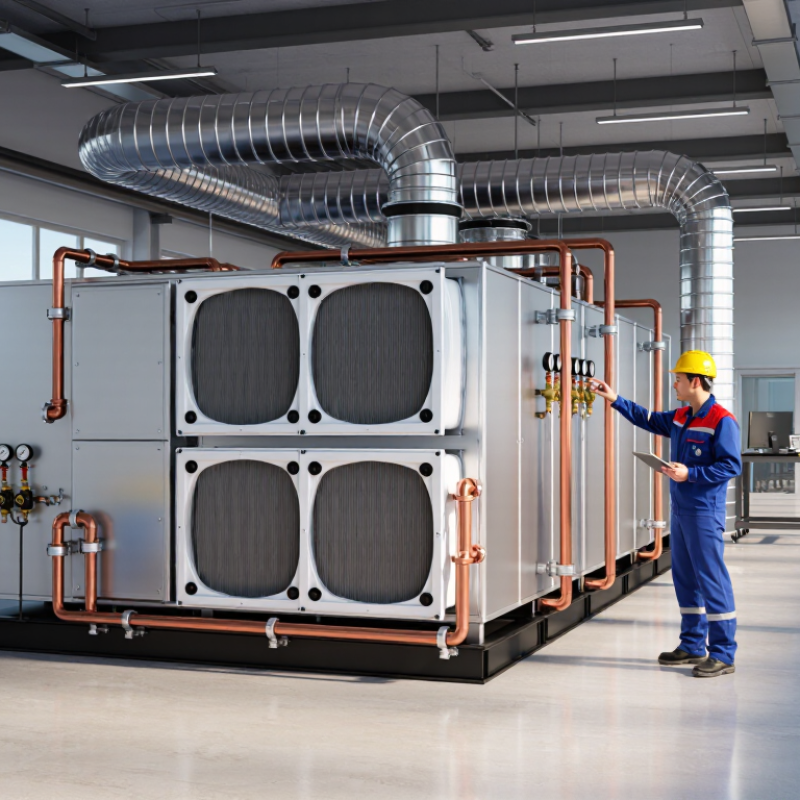
Understanding Air Heat Exchangers and Their Main Applications
How to Choose the Best Air Heat Exchanger in China?
An air heat exchanger transfers heat between air streams without mixing them directly. In winter, warm exhaust air can preheat incoming outdoor air. In summer, cooler indoor air may reduce the cooling load. Sensible units transfer temperature, while enthalpy units can also exchange limited moisture. The right choice depends on climate, airflow, humidity, and operating hours.
These systems serve offices, hospitals, factories, data centers, and food-processing rooms. They also support clean ventilation in apartments and commercial buildings. In dusty workshops, filters and accessible inspection panels are essential. A compact core may save space, but excessive pressure drop can increase fan energy. Counterflow designs often provide higher recovery efficiency. Crossflow designs may offer simpler maintenance and lower initial cost. Selection should include tested airflow, temperature efficiency, leakage rate, noise, and corrosion resistance. Local winter conditions in northern China deserve careful attention.
Tips: Ask for performance data at your actual airflow, not only ideal laboratory conditions. Check whether the exchanger suits the required air volume and fan pressure. Review cleaning access, filter replacement, drainage, and control compatibility. I have seen projects focus on efficiency while ignoring maintenance space. That mistake becomes expensive. A small design compromise can also reduce real-world performance. Compare independent test records where available, and confirm materials before signing a technical specification.
Identifying Performance Requirements for Chinese Operating Conditions
Choosing an air heat exchanger for China starts with measured operating conditions, not catalogue capacity. A coastal workshop in Guangdong may face 32°C air, 80% humidity, and salt-laden dust. Northern sites can see winter air below -15°C. These extremes change heat transfer, frost risk, and material selection. Record hourly temperatures, humidity, airflow, and pressure limits during design. Do not rely on annual averages. They hide uncomfortable peaks.
For humid southern facilities, assess sensible and latent performance separately. A unit meeting dry-bulb targets may still leave indoor air wet. Check airflow at the actual fan duty, not the advertised maximum. Every extra filter, bend, and damper raises pressure drop. Ask for tested performance curves, leakage data, sound levels, and stated test conditions. The test method matters. Without it, two capacities may not be comparable. Consider corrosion-resistant surfaces near coastal plants, and inspect drain design around the core. Small details matter.
Maintenance should shape the specification. Leave service clearance for core cleaning, filter replacement, and condensate inspection. In dusty areas, removable panels and washable prefilters can reduce downtime. In cold northern buildings, verify frost control and restart behavior after power interruption. Electrical compatibility also deserves checking, especially where voltage fluctuations occur. A supplier should provide drawings, material grades, control logic, and commissioning records. Independent verification is valuable. I would still question optimistic efficiency claims when fouling tests are absent. Real sites are rarely clean, stable, or perfectly operated. That uncomfortable gap should influence the selection.
How to Choose the Best Air Heat Exchanger in China?
Identifying performance requirements for Chinese operating conditions requires balancing sensible heat recovery, humidity control, air leakage, and maintenance needs. The chart shows representative engineering reference values for common exchanger configurations; actual performance varies with airflow, temperature, humidity, fouling, and frost protection design.
Plate and counterflow units generally provide low cross-contamination, while rotary units can deliver strong heat recovery with compact equipment but require careful control of purge and leakage in polluted or high-humidity environments.
Comparing Heat Exchanger Types, Materials, and Construction Standards
Choosing an air heat exchanger in China requires more than comparing airflow figures. Plate-fin units are compact and effective for balanced ventilation. Rotary exchangers can recover sensible and latent heat, but their seals require careful inspection. Heat-pipe designs separate air streams well and need little maintenance. Run-around coil systems suit layouts where supply and exhaust ducts cannot meet.
Material selection should follow air quality and humidity. Aluminum offers low weight and good thermal conductivity. Galvanized steel provides economical structural strength, but damaged coatings may invite corrosion. Stainless steel is safer for humid, salty, or mildly corrosive environments. Copper tubes transfer heat efficiently, although they can increase cost. Check fin spacing too. Dusty air needs wider passages.
Construction standards deserve equal attention. Request drawings, material certificates, weld or brazing procedures, and factory pressure-test records. Compare performance under identical airflow, temperature, humidity, and pressure conditions. Project documents may require applicable Chinese GB/T requirements, with ISO, EN, or ASHRAE references for additional verification. Inspect casing joints, drain pans, access doors, seals, and insulation thickness. Small gaps can create bypass leakage and reduce actual recovery.
A lower quotation can look attractive on paper. It may hide thinner panels or weaker seals. I would also question test data without clear measurement conditions. In practice, installation quality often changes the final result more than expected. This is where many selections become imperfect.
Evaluating Chinese Manufacturers, Certifications, and Product Quality
Choosing the best air heat exchanger in China requires more than comparing prices. A capable manufacturer should explain airflow, temperature ranges, pressure drop, materials, and cleaning access. Ask for drawings with dimensions, test conditions, and manufacturing tolerances. Request production photos, not only polished catalog images. Weld seams, fin spacing, gasket seating, and drain details often reveal process discipline. Small details matter. A clear technical conversation shows practical expertise.
Certifications should be checked carefully. Ask for the certificate number, issuing body, validity period, and covered factory location. ISO 9001 can indicate a controlled quality system, but it does not prove every exchanger performs well. Confirm whether CE, RoHS, pressure, or other standards apply to your destination and application. Test reports should identify the model, test date, instruments, and measured results. Generic documents are weak evidence.
Factory audits can reveal more than brochures. Inspect material labels, incoming inspection records, welding procedures, leak-testing equipment, and final packing. Ask how rejected units are separated and corrected. A sample can mislead. Production consistency matters more. I would also request independent performance testing for critical projects and contactable project references. During evaluation, leave room for doubt; one overlooked gasket or incorrect alloy can reduce service life. No evaluation is perfect. Look closer.
Calculating Total Cost, Installation Needs, and Long-Term Maintenance
Choosing an air heat exchanger in China requires more than comparing purchase prices. Calculate the total cost across its working life. Include equipment, transport, import duties, controls, ductwork, insulation, electrical changes, and commissioning. A low quotation can become expensive after installation. That is often missed.
Check the building before selecting capacity. Measure airflow, indoor temperature, humidity, available space, and pressure loss. Confirm whether the unit needs lifting equipment or a reinforced service platform. Leave clear access for filter removal and coil cleaning. In older factories, narrow doors and weak power supplies can delay installation. Measure twice.
Long-term maintenance deserves equal attention. Ask for filter dimensions, replacement intervals, spare-part availability, and local technical support. A washable filter may reduce recurring costs, but cleaning still requires labor and water. Inspect condensate drainage, seals, fans, and heat-transfer surfaces at scheduled intervals. Keep simple records of airflow, noise, energy use, and repair dates.
I once underestimated maintenance labor during a project review. The equipment performed well, but cleaning access was inconvenient. That small design choice increased service time every month. Request a written maintenance schedule and realistic service prices before signing. Also verify efficiency under your actual summer and winter conditions, not only laboratory ratings. A qualified engineer should review the final selection against applicable Chinese building, electrical, and safety requirements.