
What Is a Fence Post and Which Type Is Best?

A fence can look straight on installation day and still fail after one wet winter. The hidden decision is the post. Fence Posts carry wind, soil pressure, gate movement, and years of moisture exposure. They are the structural backbone beneath the visible boards, panels, or wire.

The global fencing market reflects this practical demand. Grand View Research estimates the market was worth more than $30 billion in 2023, with continued growth expected through 2030. Its industry analysis also highlights residential replacement, agricultural protection, and commercial security as major demand areas. These figures describe a broad market, not a guarantee of quality. Local soil, drainage, frost depth, and post spacing still matter more at one property.

“Every fence starts with a post, and every post starts with the ground,” says Larry Janesky, a construction educator and founder of Contractor Nation. That principle deserves a closer look. Timber posts can offer warmth and easy installation, while galvanized steel resists insects and many forms of decay. Concrete posts provide impressive rigidity, but poor drainage can create cracking or trapped moisture. Composite alternatives may reduce maintenance, though their long-term performance varies by product and climate.

The USDA Wood Handbook warns that moisture control is central to wood durability. That evidence supports a simple lesson: the cheapest post is rarely the cheapest completed fence. Still, no type wins everywhere. A rocky, wet backyard may punish the choice that performs perfectly in dry, compact soil. This guide examines Fence Posts by material, load, climate, installation method, and expected service life. Expect useful comparisons, but also a few uncomfortable trade-offs.
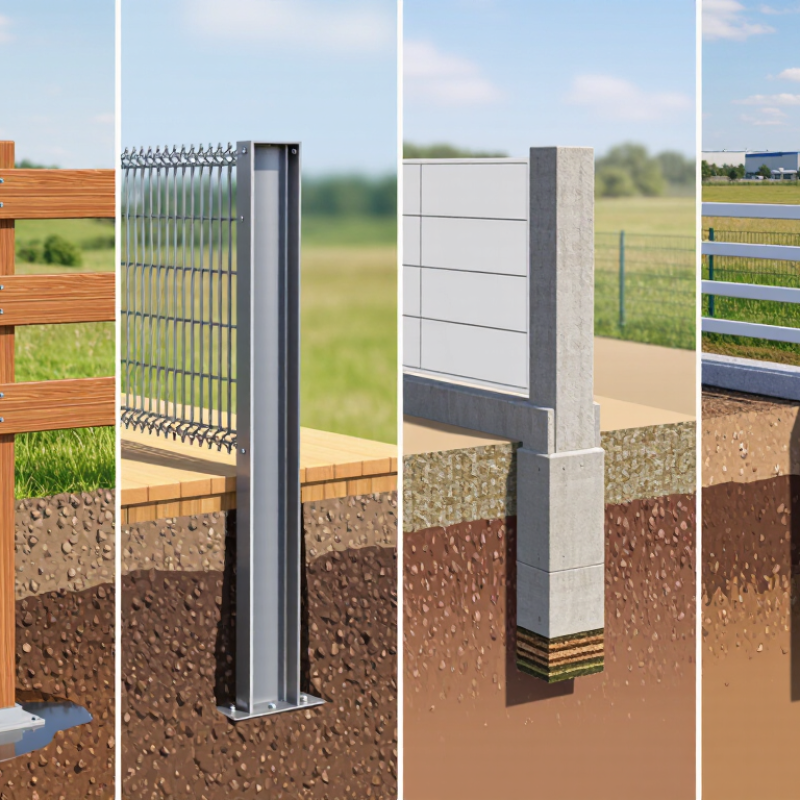
What Is a Fence Post and Which Type Is Best?

What Is a Fence Post? Its Structural Role, Materials, and Key Terms

A fence post is the vertical support that carries the weight of rails, panels, and gates. It transfers wind pressure into the ground, so its footing matters as much as the visible fence. A post should remain plumb, meaning perfectly vertical, and it must resist movement after the soil settles.

Common materials include treated wood, galvanized steel, concrete, and vinyl. Wood is easy to cut and repair, but moisture can cause swelling or decay near the soil line. Steel offers high strength with a slimmer profile, while concrete posts provide excellent rigidity but require careful handling. Vinyl resists rot, yet it depends heavily on internal reinforcement and strong connections. There is no single best type. Soil conditions, fence height, gate weight, drainage, and local weather should guide the choice. I have learned that choosing a post by appearance alone is an expensive mistake.

Tips: Check the soil before selecting the footing depth. Loose or wet ground may need wider concrete support. Keep water away from wood ends, and use gravel below the footing when drainage is poor. A level and plumb line reveal small errors early. Let concrete cure fully before attaching heavy panels. Recheck the line after installation, because even careful work can shift.

How 6–8 ft Spacing and One-Third Embedment Affect Fence Stability

What Is a Fence Post and Which Type Is Best?

A fence post carries the panels, rails, and wind pressure into the ground. Wood posts offer a natural appearance and are easy to cut on site. Steel posts resist bending and often suit exposed, windy locations. Concrete posts can provide strong support, but handling them requires more effort. The best choice depends on fence weight, soil condition, moisture, and expected maintenance.

Post spacing usually falls between 6 and 8 feet. Six-foot spacing creates a firmer line, especially for solid boards that catch wind like sails. Eight-foot spacing uses fewer posts, but panels may flex more between supports. I prefer tighter spacing near corners, gates, and slope changes. Those areas receive extra movement.

Embedment matters as much as spacing. A practical rule places about one-third of the post’s total length below ground. For example, a 9-foot post may provide 6 feet above grade and 3 feet below it. Firm clay may hold a post well, while loose sand can demand deeper installation or wider footing. Remove soft soil, add drainage gravel, and keep the post base away from standing water. Concrete can improve stability, though poor drainage may trap moisture around wood. I have seen carefully aligned fences lean after one wet season because the hole was too shallow. That mistake is easy to repeat.

What Is a Fence Post and Which Type Is Best? - How 6–8 ft Spacing and One-Third Embedment Affect Fence Stability

Practical comparison of common fence-post materials, spacing, embedment, and stability considerations

Post Type Typical Strengths Common Limitations Suitable Fence Applications Typical Service-Life Considerations Recommended Installation Approach
Pressure-Treated Wood Easy to cut and install; compatible with most wood fencing; absorbs moderate impact without cracking. Can rot at the ground line if moisture protection is inadequate; may warp, split, or shrink over time. Privacy fences, picket fences, garden fences, and many residential wood panels. Often lasts for many years when properly treated, drained, and maintained; actual life depends heavily on soil moisture and treatment level. Use a post size appropriate to the fence height and wind exposure. Keep the post bottom away from standing water and provide well-draining backfill.
Cedar or Other Naturally Durable Wood Good resistance to decay, attractive appearance, and relatively easy field modification. Usually costs more than standard treated lumber; can weather, split, or soften near consistently wet soil. Decorative fences, privacy fencing, and projects where appearance is important. Durability varies by wood species, heartwood content, climate, and exposure. Direct soil contact generally shortens service life. Use durable posts or isolate the wood from persistent moisture. Seal exposed end grain and inspect the ground-line area periodically.
Galvanized Steel High strength for its size; resists bending and is useful where wind loads or narrow posts are concerns. Can corrode if the protective coating is damaged; may require compatible brackets and fasteners. Chain-link fencing, agricultural fencing, metal panels, and high-wind installations. Long service life is possible when the zinc coating remains intact and water does not collect around damaged areas. Protect cut edges and scratches. Use corrosion-compatible hardware and embed the post deeply enough for the fence height and site conditions.
Aluminum Lightweight, naturally corrosion-resistant, and easy to handle. Less rigid than steel and more vulnerable to bending from impact or high wind unless the section is properly sized. Decorative metal fences, pool enclosures, and low- to moderate-load residential fencing. Typically durable in outdoor environments, although surface damage and galvanic corrosion at dissimilar-metal connections should be managed. Use reinforced sections or shorter spans where wind exposure is high. Follow the fence-system requirements for post spacing and footings.
Concrete Very rigid, resistant to rot and insects, and capable of supporting heavy masonry or metal fence sections. Heavy to transport and install; difficult to modify after placement; can crack if poorly reinforced or exposed to movement and freeze-thaw conditions. Masonry walls, heavy gates, security fencing, and permanent boundary structures. Can provide a long service life when correctly reinforced, drained, and designed for local soil and climate conditions. Use a properly designed footing, reinforcement where needed, and drainage that limits prolonged water exposure and frost-related movement.
Composite or Recycled-Polymer Post Resists rot, insects, and many moisture-related problems; provides a consistent appearance. Product stiffness and temperature performance vary; may require a structural insert for taller or wind-exposed fences. Decorative, low-maintenance residential fencing and selected privacy-fence systems. Service life depends on the formulation, ultraviolet protection, structural design, and installation method. Follow the system's footing and reinforcement requirements. Do not assume a hollow polymer post has the same bending capacity as solid wood or steel.
Fence Condition Suggested Post Spacing Embedment Guideline Stability Effect Key Installation Notes
Lightweight fence in a sheltered location Up to 8 ft on center At least one-third of the above-ground post length, subject to local requirements Wider spacing can be adequate when panel weight and wind exposure are low. Use sound posts, compacted backfill, and properly secured rails. Avoid applying the 8 ft spacing rule to heavy or solid panels without checking design loads.
Typical residential privacy fence Closer spacing reduces rail span, panel flexing, and the load carried by each post. Solid panels catch more wind than open pickets. Increase post size, footing size, or reduce spacing where wind exposure is significant.
High-wind, exposed, or solid-panel fence Shorter spans and deeper, stronger footings substantially improve resistance to overturning and lateral movement. Consider structural calculations, larger posts, reinforced concrete footings, and local wind-load requirements.
Low picket or open-rail fence Approximately 6–8 ft on center, depending on rail stiffness One-third embedment is a common starting point Open designs expose less surface area to wind, but weak rails can still cause movement between posts. Match post spacing to rail length and fence height. Keep the bottom of wood posts from remaining in wet soil.
Gate or end post Not governed by a regular line-post spacing rule Gate posts carry concentrated weight and repeated swinging forces, making them critical to overall alignment. Use larger or reinforced posts, robust hinges, and a footing sized for the gate width, weight, and soil conditions.
Soft, wet, sandy, or frost-susceptible soil Frequently reduced from the normal spacing range May require deeper or specially designed footings Weak or moving soil provides less lateral resistance and can cause leaning, heaving, or settlement. Improve drainage, remove unsuitable soil, compact structural fill, and follow local frost-depth and foundation requirements.

General rule: A fence post is the vertical structural member that transfers the weight and wind forces of the fence into the soil or footing. Spacing of approximately 6–8 ft on center is common for many residential fences, while embedding about one-third of the above-ground post length is a widely used starting guideline. Actual requirements depend on fence height, panel weight, wind exposure, soil conditions, frost depth, drainage, post material, gate loads, and applicable local building regulations.

Wood, Steel, Vinyl, and Concrete: Comparing Strength and Service Life

A fence post transfers wind, gate weight, and soil movement into the ground. Its material controls how long that connection remains dependable. Wood feels natural and is easy to cut, but untreated wood can decay quickly in wet soil. The USDA Forest Products Laboratory’s Wood Handbook reports that preservative treatment can extend wood’s service life for decades, depending on moisture, insects, and installation. A field mistake remains common: burying untreated end grain without drainage.

Steel offers high bending strength and suits tall or heavily loaded fences. However, exposed steel rusts at scratches, cut edges, and below-ground joints. The International Zinc Association’s corrosion data indicates that galvanized coatings can protect steel for several decades, with service life varying sharply by soil and atmospheric exposure. Good drainage matters more than many installers expect.

Vinyl resists rot, insects, and routine moisture, but it can become brittle after long ultraviolet exposure or severe cold. Industry life-cycle assessments for rigid PVC commonly use service periods of 50 years or more, though actual fence performance depends on formulation and support design. Concrete posts resist decay and fire, yet they can crack from frost, impact, or poor mix control. ACI durability guidance treats 50 years as a common design reference for concrete structures, not a promise for every post. For most properties, steel provides the strongest slender profile, while treated wood offers easier repair and a warmer appearance. I would not choose from lifespan alone. Soil, drainage, wind, and gate loads often decide the result.

How Soil, Wind, and Fence Loads Determine Post Size and Foundation Depth

A fence post is the vertical member that transfers panel, gate, and wind forces into the ground. The best type depends on soil, exposure, and load—not appearance alone. The American Society of Civil Engineers’ ASCE/SEI 7-22 provides wind-speed maps and design procedures for calculating pressure. Using its common velocity-pressure relationship, 100 mph wind produces about 25.6 pounds per square foot before exposure adjustments. At 140 mph, pressure rises to roughly 50.2 pounds per square foot. That increase is substantial.

Soil changes the foundation design. The USDA Natural Resources Conservation Service recommends checking soil texture, drainage, and restrictive layers through its Web Soil Survey. Dense sand or stiff clay can resist lateral movement better than loose fill or saturated silt. In weak soil, a larger footing may matter more than a stronger post. A practical starting point is burying about one-third of the post length, plus additional depth for frost or unstable ground. It is only a starting point.

For light privacy fencing, treated wood or corrosion-resistant steel may work when posts are properly braced. Heavy gates need larger posts and deeper footings because hinges create concentrated forces. Concrete should surround the post carefully, with drainage considered where wood contacts soil. Many failures begin at the surface. Local building requirements can override general rules, especially in high-wind regions. I would not size a post from panel height alone; that shortcut ignores wind exposure, gate loads, and soil variability. A site inspection may reveal conditions that a standard table misses.

Which Fence Post Is Best? A Data-Based Choice for Each Site Condition

A fence post is the vertical support that carries rails, panels, gates, and wind loads. Its best material depends on measurable site conditions, not appearance alone. Start with the soil. Probe several locations before choosing a post.

For firm, well-drained soil, treated timber can perform well when installed deeply and kept clear of standing water. Steel posts suit open, windy areas because their high strength-to-weight ratio resists bending. In wet ground, concrete posts tolerate moisture, but poor drainage can still cause movement or cracking. Loose sand needs wider footings and careful compaction. Clay requires attention to seasonal expansion and shrinkage.

Cold regions need posts below the local frost depth, or heaving may lift them during winter. A useful field record includes soil type, water level, frost depth, post spacing, and expected wind exposure. Heavier gates often justify larger posts and deeper foundations. Data beats guesswork here. However, site measurements can mislead if taken after unusual rain. One dry inspection is not enough.

A practical comparison should examine bending strength, decay resistance, installation depth, maintenance, and replacement cost. Timber may be easier to repair, while steel can demand corrosion protection at cut edges. Concrete feels permanent, yet transport and alignment are less forgiving. I once underestimated drainage beside a slope; the posts stood straight, but water collected around their bases. The design worked on paper, not on that ground. Each site deserves its own evidence.

Go to Top