
Top Galvanized Steel Coil Manufacturers Worldwide
Choosing a Galvanized Steel Coil Manufacturer requires more than comparing production volume or export figures. Global buyers need consistent zinc coatings, accurate dimensions, reliable delivery, and clear quality documentation. A coil may look bright and uniform, yet hidden variations can affect forming, welding, and corrosion performance.
Dr. Frank Goodwin, a recognized zinc-industry technical expert, explains the core principle clearly: “Zinc protects steel through both barrier protection and sacrificial protection.” This idea remains central when evaluating leading manufacturers worldwide. Strong producers control cleaning, annealing, hot-dip galvanizing, skin passing, and tension leveling with careful process discipline. Their laboratories also test coating mass, yield strength, elongation, surface finish, and dimensional tolerance.
The best suppliers usually provide mill certificates, inspection records, traceability codes, and practical technical support. Look closely. A reliable coil should arrive with stable edges, even coating, firm packaging, and minimal surface damage. Container loading also matters, especially when coils cross humid oceans. Some manufacturers excel in automotive-grade steel, while others focus on construction panels, ductwork, or structural applications. No single ranking stays perfect. Market conditions change, and public information can remain incomplete. That is an uncomfortable limitation.
This guide compares top Galvanized Steel Coil Manufacturer candidates through measurable capabilities, regional reach, certifications, product range, and customer experience. It also considers less visible factors, including response speed and complaint handling. Those details often decide whether a supplier becomes a long-term partner or an expensive lesson.
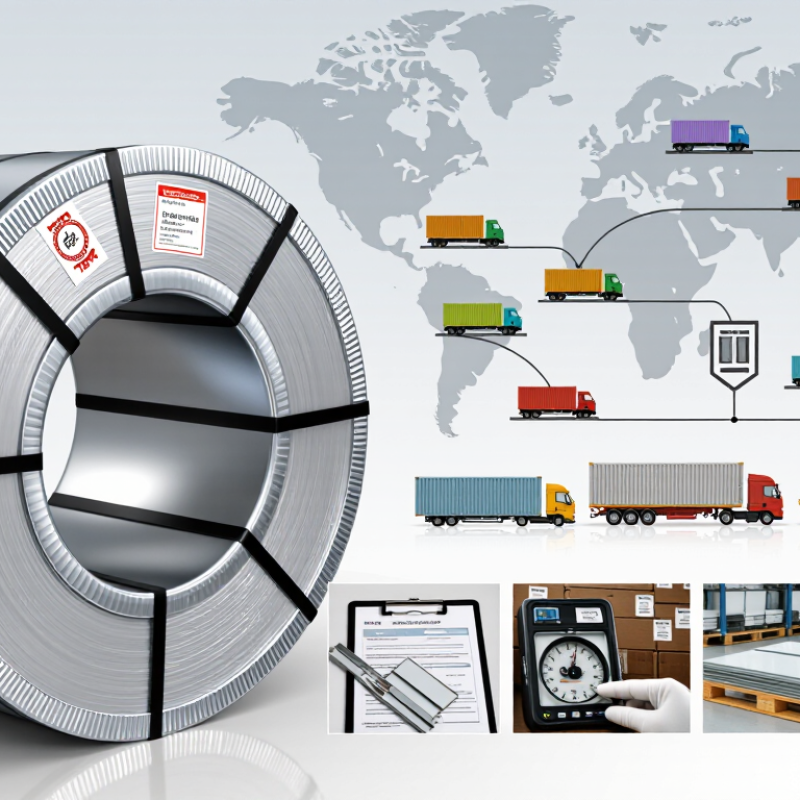
What Galvanized Steel Coil Is and How It Is Made
Galvanized steel coil is flat steel coated with zinc to slow corrosion. The zinc creates a physical barrier and offers sacrificial protection when the surface is scratched. Most industrial coils use continuous hot-dip galvanizing. The steel strip passes through cleaning tanks, where oil, scale, and dust are removed. It is then heated before entering a bath of molten zinc.
Inside the zinc pot, the strip moves at a controlled speed. Air knives wipe away excess zinc and help set the coating thickness. The strip then cools and passes through inspection equipment. Operators check coating mass, surface appearance, width, thickness, and adhesion. Small differences matter. Uneven cleaning can cause bare spots or weak bonding. That detail is easy to underestimate.
Experienced producers also manage alloy chemistry, strip tension, and bath temperature. These controls influence spangle size, surface roughness, and forming performance. Some coils receive additional treatments, such as skin passing or surface oiling, depending on their intended use. Testing may include bending, coating adhesion, and corrosion evaluation. No production line is perfect. Edge areas can behave differently from the center, and excessive zinc can increase cost without improving performance. Reliable manufacturing depends on documented controls, calibrated instruments, and operators who question unusual results rather than accepting every coil automatically.
Top Galvanized Steel Coil Manufacturers Worldwide - What Galvanized Steel Coil Is and How It Is Made
| Data Dimension | Typical Industry Information | Common Values or Designations | Why It Matters | Relevant Standard or Technical Basis |
|---|---|---|---|---|
| Product Definition | Galvanized steel coil is flat-rolled steel coated with a protective layer of zinc to improve resistance to atmospheric corrosion. | Zinc-coated carbon steel coil | The zinc layer protects the steel through both barrier protection and sacrificial, or cathodic, protection. | ASTM A653/A653M; EN 10346; JIS G3302 |
| Steel Substrate | The substrate is generally cold-rolled low-carbon steel selected for forming, structural, or high-strength applications. | Commercial quality, forming quality, structural grades, high-strength low-alloy grades | The substrate grade determines strength, elongation, weldability, and formability. | Grade requirements vary by the selected product standard. |
| Main Coating Process | The most widely used continuous production method is hot-dip galvanizing, in which cleaned steel strip passes through a bath of molten zinc. | Molten zinc bath at approximately 450°C | Continuous processing provides consistent coating coverage across long coils and supports high production volumes. | Continuous hot-dip galvanizing practice |
| Surface Preparation | Before entering the zinc bath, the strip is usually cleaned, pickled or chemically treated as required, rinsed, dried, and annealed or heat-treated according to the product design. | Degreasing, rinsing, annealing, reduction control | Effective surface preparation is essential for coating adhesion and uniformity. | Mill process controls and applicable coating standard |
| Zinc Coating Mass | Coating mass is normally specified as the total zinc mass on both sides of the sheet. | Z100, Z120, Z180, Z275 are common examples; the number indicates approximate total coating mass in g/m². | A higher coating mass generally provides greater corrosion protection, although service life also depends on environment, design, and maintenance. | ASTM coating designations and EN coating classes use different naming conventions. |
| Approximate Zinc Thickness | For a coating distributed approximately equally on both sides, 100 g/m² of zinc corresponds to about 7 micrometres per side. | Approximately 14 micrometres total for 100 g/m²; approximately 19 micrometres total for 140 g/m² | This is a calculated approximation based on zinc density and should not replace a measured coating-thickness test. | Calculation uses zinc density of approximately 7.14 g/cm³. |
| Typical Thickness Range | Commercial galvanized coils are available in a broad range of thicknesses for construction, automotive, appliance, and general fabrication uses. | Approximately 0.25–3.20 mm, depending on grade, coating, and mill capability | Thickness affects stiffness, weight, forming behavior, and load-bearing performance. | Actual ranges are supplier- and specification-dependent. |
| Typical Coil Width Range | Coil widths are selected according to downstream cutting, roll-forming, stamping, and fabrication requirements. | Approximately 600–2,000 mm in common commercial supply | Width affects material yield, processing efficiency, and the ability to produce required component dimensions. | Available widths vary by production line and order specification. |
| Surface Finish | Surface appearance may be controlled through spangle management, skin passing, leveling, and surface treatment. | Regular spangle, minimized spangle, zero-spangle appearance, skin-passed surface | Surface finish influences appearance, paintability, roughness, and forming performance. | Finish terminology differs among regional standards and suppliers. |
| Post-Treatment Options | Additional treatments can be applied after galvanizing to improve temporary corrosion resistance, paint adhesion, or handling performance. | Chromate-free passivation, chemical treatment, oiling, or dry surface treatment | Post-treatment selection should match storage conditions, forming operations, painting, and environmental requirements. | Specified by customer requirements and applicable environmental regulations. |
| Mechanical Properties | Mechanical performance depends on the steel grade and processing route rather than zinc coating mass alone. | Yield strength, tensile strength, elongation, and bend performance | These properties determine whether the coil is suitable for deep drawing, roll forming, structural members, or stamping. | ASTM A653/A653M, EN 10346, JIS G3302, and project specifications |
| Corrosion Performance | Zinc corrosion products can form a protective patina under suitable atmospheric conditions, slowing further corrosion. | Performance varies with coating mass, humidity, salt exposure, pollutants, drainage, and edge condition. | Coating selection should be based on the actual service environment rather than zinc mass alone. | Atmospheric exposure and corrosion classification methods vary by region. |
| Common Applications | Galvanized coil is widely processed into building components, roofing and siding, ductwork, automotive parts, appliances, cable trays, and general fabricated products. | Construction, transportation, HVAC, appliances, agriculture, and light engineering | Different applications require different combinations of corrosion resistance, formability, strength, and surface appearance. | Application-specific engineering and procurement specifications |
| Quality Inspection | Typical inspections include dimensional measurement, coating-mass or coating-thickness testing, tensile testing, bend testing, surface examination, and coil-shape checks. | Thickness, width, flatness, coating mass, adhesion, tensile strength, elongation | Inspection confirms conformity before slitting, stamping, roll forming, painting, or installation. | Test methods are defined by the selected product standard and purchase specification. |
| Storage and Handling | Coils should be stored indoors or under dry, ventilated conditions and protected from condensation, standing water, and corrosive materials. | Dry storage; avoid wet stacking and trapped moisture | Improper storage can cause wet storage stain, surface discoloration, and premature deterioration. | Good storage practice depends on climate, packaging, and delivery conditions. |