China has become a significant manufacturing base for industrial fluid-power equipment, including Piston Pump systems. Its suppliers serve construction, mining, energy, marine, agriculture, and process industries worldwide.
Market evidence supports this attention. MarketsandMarkets projects the global hydraulic pumps market to grow from about USD 11.6 billion in 2023 to USD 15.7 billion by 2028. Grand View Research also reports sustained demand through 2030, driven by automation, infrastructure investment, and industrial modernization. These figures cover several pump types, not piston pumps alone. That distinction matters.
Performance matters more than catalog claims.
This guide examines ten Chinese piston pump manufacturers for international buyers. The assessment considers product range, pressure capability, displacement control, materials, testing procedures, export experience, and technical support. ISO 9001 certification is useful, but it does not replace application testing. Buyers should request flow-pressure curves, efficiency data, seal specifications, noise levels, and documented endurance results. A clear quotation should also show warranty terms, spare-parts availability, delivery schedules, and applicable compliance requirements.
Some manufacturers specialize in axial piston pumps. Others focus on radial designs, hydraulic transmission units, or customized industrial assemblies. Their strengths are not identical. A supplier with attractive pricing may offer limited engineering support. Another may provide excellent testing but longer lead times. No ranking is completely objective. That is worth admitting.
The companies selected here are compared through a buyer-focused lens, using public company information, product documentation, market research, and practical procurement considerations. Global buyers should verify current certifications and sample performance before signing contracts. A careful decision begins with evidence, not promises.
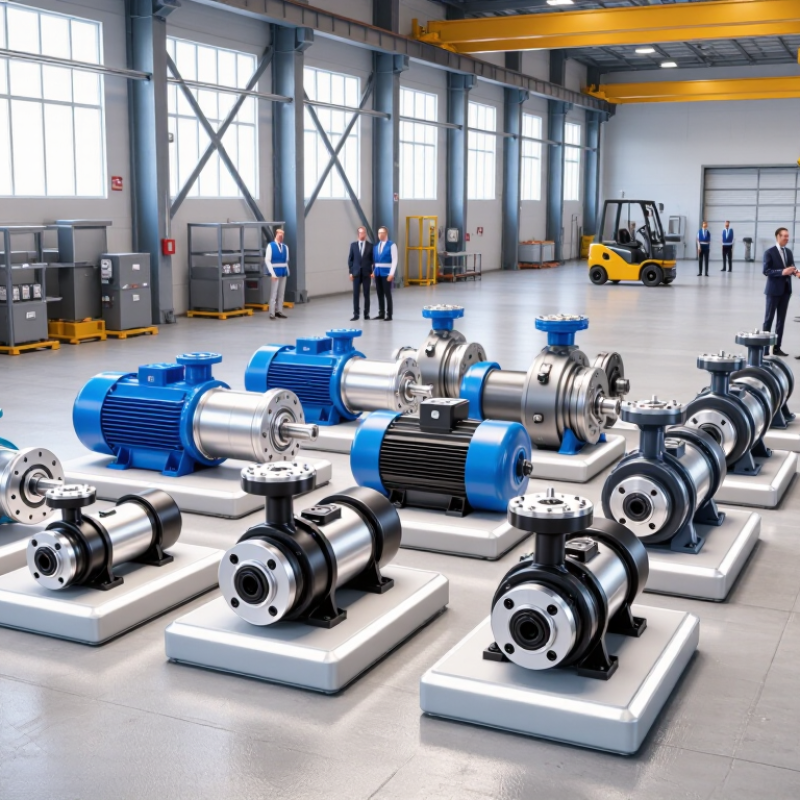
A piston pump is a positive-displacement machine that moves fluid through repeated piston movement. Each stroke creates suction, then pressure. This design supports high pressures, accurate flow, and demanding hydraulic work. It is used in industrial equipment, water systems, construction machinery, and process lines. However, piston pumps are not automatically the best choice. Fluid viscosity, temperature, contamination, speed, and duty cycle all affect performance.
Manufacturer choice matters because design quality reaches beyond the pump body. Experienced suppliers should explain material selection, sealing methods, pressure limits, noise control, and maintenance access. Ask for performance curves, inspection records, test procedures, and traceable component data. A reliable manufacturer should also discuss failure risks honestly. During commissioning, small details often matter: incorrect alignment, dirty oil, or an unsuitable seal can shorten service life quickly. Technical support after delivery is equally important, especially when operating conditions change.
Tips: Compare total operating cost, not only purchase price. Request a sample test report and confirm every specification in writing. Check whether replacement parts are available locally. An overlooked detail can become an expensive lesson. I have found that even a well-designed pump may underperform when users ignore filtration or installation instructions. That weakness deserves review, not excuses. Choose a manufacturer willing to share evidence, admit limitations, and improve the design through real operating feedback.
Evaluating Chinese piston pump manufacturers requires more than comparing catalogue prices. Experienced buyers inspect production records, machining accuracy, and pressure-test procedures. A factory should explain how it controls cylinder bores, valve seats, and surface finishes. These details affect leakage, noise, and service life. Ask for inspection reports, not only polished photographs.
Technical evidence matters. Reliable manufacturers provide flow curves, pressure ratings, material certificates, and test conditions. Their engineers should discuss cavitation risks, fluid temperature, seal compatibility, and duty cycles clearly. During a factory visit, buyers can check assembly areas, calibration equipment, and parts labeling. Batch numbers should remain traceable from raw material to final shipment. Small details reveal factory discipline.
Service capability also deserves careful attention. Spare-parts availability, drawing accuracy, installation guidance, and response time can influence total ownership costs. Speaking with previous industrial users may expose weaknesses that brochures hide. A low price can still look attractive. That is where judgment sometimes fails. Some evaluations also rely too heavily on certifications, although certificates cannot replace practical testing. Requesting a sample unit or witnessed performance test may create extra cost, but it produces stronger evidence. Clear communication matters when specifications, packaging, and acceptance criteria cross language and distance barriers.
China’s top 10 piston pump manufacturers at a glance represent a broad industrial supply base, from axial-piston units for mobile machinery to radial designs for high-pressure systems. Their products commonly serve construction equipment, agricultural machines, marine systems, and factory automation.
MarketsandMarkets estimates that the global hydraulic pumps market will grow from about USD 10.6 billion in 2023 to USD 13.7 billion by 2028, at roughly 5.2% annually. This expansion strengthens China’s role as a sourcing center, but price alone is a weak filter.
A practical review should compare displacement accuracy, rated pressure, volumetric efficiency, noise levels, and seal durability. Chinese suppliers also differ in CNC capacity, test-bench coverage, documentation, and after-sales response. The top ten should therefore be assessed through factory audits, sample testing, and traceable inspection records.
Small details matter. Check oil cleanliness limits, shaft tolerances, and cold-start performance. The China Hydraulic Pneumatic & Seals Industry Association reports continued growth in domestic hydraulic equipment production, reflecting deeper manufacturing capability across component suppliers.
Still, published specifications may not show field performance. That is where buyers need caution. A pump that performs well during a short factory test may behave differently after thousands of operating hours, especially with contaminated fluid or unstable temperature. Reports from Grand View Research also identify construction and industrial equipment as major demand areas, though market forecasts can vary by research method and product definition. Comparative testing remains necessary before approving a long-term supply contract.
China Top 10 Piston Pump Manufacturers for Global Buyers
How to Compare Products, Quality, and Manufacturing Capabilities
Global buyers should compare piston pumps by verified performance, not catalogue pressure alone. Grand View Research estimates the global hydraulic pumps market will grow steadily through 2030, with Asia-Pacific remaining a major production region. This growth creates more choices, but also more inconsistent specifications. Request displacement, rated pressure, peak pressure, volumetric efficiency, noise level, and tested operating temperature. Ask for measured results, not only declared limits. Small details matter.
For a practical comparison, score each of the ten manufacturers across product design, quality control, delivery reliability, and technical support. ISO 4406 cleanliness reporting is important for servo and high-pressure systems. A serious factory should show calibrated test benches, CNC machining capacity, heat-treatment records, and batch traceability. Check whether pressure testing covers every unit or only sample units. That difference is significant. Request endurance-test hours and failure statistics where available.
Manufacturing claims need physical evidence. Review inspection photographs, material certificates, dimensional reports, and a sample production record. The International Organization for Standardization’s ISO 9001 framework supports controlled processes, but certification alone cannot prove pump durability. My early comparisons often relied too heavily on certificates. That was a mistake. A factory visit or independent pre-shipment inspection can reveal inconsistent surface finishing, weak packaging, or unclear assembly procedures. Also compare spare-part availability, warranty response time, and documentation quality. The cheapest quotation may become expensive after installation.
This non-brand-specific comparison framework uses a 100-point procurement model for global buyers. Product performance covers pressure, flow stability, efficiency, and application suitability; quality covers testing, traceability, certifications, and consistency; manufacturing capability covers machining, assembly capacity, customization, lead time, and export support.
Buyers can use these weightings to compare shortlisted manufacturers consistently, then verify technical datasheets, ISO 9001 documentation, inspection records, production capacity, warranty terms, and after-sales service before making a purchasing decision.
China Top 10 Piston Pump Manufacturers for Global Buyers
A top-ten list is only a starting map. Global buyers should verify each supplier against real project needs. Grand View Research estimates that the global hydraulic pumps market will expand steadily through 2030. This growth increases supplier choices, but also increases comparison risks. Ask for pump curves, flow tolerance, pressure ratings, material certificates, and recent factory test records. A polished website proves very little.
Check whether the manufacturer controls machining, assembly, testing, and final inspection. Request serial-number traceability for cylinders, valves, seals, and critical piston parts. Confirm the quality system independently. The ISO Survey 2022 recorded more than 1.2 million valid ISO 9001 certificates worldwide. Certification helps, but it does not replace a production audit. Ask how many piston pumps the factory tested last year. Also review failure data, warranty terms, spare-parts availability, and response times.
Tips: Compare three written quotations using the same technical specification. Require a sample inspection before mass production. Match the pump with the correct international standard, such as API 674 where applicable. Confirm testing pressure, noise limits, packing details, and export documents. A low price can hide weak materials or limited support. I would not trust an impressive factory tour alone. A video call cannot reveal every process gap. Leave room for doubt, and verify the details that affect operation.
| Rank | Anonymous Supplier Profile | Primary Piston Pump Types | Typical Displacement Range | Typical Working Pressure | Common Application Focus | Material and Configuration Options | Documents Global Buyers Should Request | Best Buyer Fit |
|---|---|---|---|---|---|---|---|---|
| 1 | Supplier Profile 01 | Axial piston variable-displacement pumps | 45–280 cm³/rev | 250–350 bar | Mobile hydraulics, construction equipment, agricultural machinery | Cast iron housings, steel shafts, SAE and metric ports, electronic or mechanical controls | Technical drawing, pressure test report, material declaration, installation manual | High-volume OEM buyers |
| 2 | Supplier Profile 02 | Swash-plate axial piston pumps | 28–200 cm³/rev | 210–315 bar | Industrial power units, presses, injection molding equipment | Single or tandem pump layouts, multiple displacement controls, oil-compatible seals | Performance curve, dimensional inspection report, seal specification, warranty terms | Industrial system integrators |
| 3 | Supplier Profile 03 | Bent-axis piston pumps and motors | 40–250 cm³/rev | 280–400 bar | Winches, drilling equipment, marine drives, heavy-duty transmissions | High-strength shafts, through-drive options, open- and closed-circuit configurations | Load-cycle test results, shaft torque data, circuit diagram, spare-parts list | Heavy-duty equipment buyers |
| 4 | Supplier Profile 04 | Radial piston pumps | 5–100 cm³/rev | 350–700 bar | Hydraulic presses, clamping systems, test benches, lifting systems | Compact multi-cylinder layouts, hardened plungers, high-pressure valve blocks | Burst-pressure test, fatigue-cycle data, cleanliness report, relief-valve settings | High-pressure specialists |
| 5 | Supplier Profile 05 | Compact axial piston pumps | 16–75 cm³/rev | 200–280 bar | Forklifts, compact loaders, municipal vehicles, small machinery | Small-frame housings, low-noise options, integrated charge pumps, metric fittings | Noise test, efficiency data, mounting dimensions, operating-temperature range | Compact-equipment OEMs |
| 6 | Supplier Profile 06 | Fixed-displacement piston pumps | 10–160 cm³/rev | 180–300 bar | Standard hydraulic power packs, lubrication systems, machine tools | Simple control architecture, cast or ductile iron bodies, multiple drive-shaft choices | Factory acceptance test, flow-rate data, shaft and flange drawing, maintenance schedule | Cost-sensitive buyers |
| 7 | Supplier Profile 07 | Variable-displacement pumps with electronic control | 55–180 cm³/rev | 250–350 bar | Automated machinery, energy-efficient mobile systems, electro-hydraulic controls | Proportional control, CAN communication options, pressure and load-sensing feedback | Control protocol, wiring diagram, EMC test information, software parameter list | Automation-focused buyers |
| 8 | Supplier Profile 08 | Piston pumps for water and low-lubricity fluids | 2–60 cm³/rev | 100–500 bar | Water hydraulics, cleaning systems, filtration, process equipment | Stainless steel wetted parts, ceramic or coated plungers, corrosion-resistant seals | Fluid compatibility chart, corrosion test, seal certification, hygiene or process documentation | Special-fluid applications |
| 9 | Supplier Profile 09 | Hydraulic piston pumps for replacement projects | 20–160 cm³/rev | 210–315 bar | Aftermarket repair, equipment refurbishment, distributor inventories | Interchangeable mounting patterns, replacement cartridges, standard seal kits | Cross-reference chart, compatibility statement, incoming inspection record, spare-parts availability | Distributors and repair centers |
| 10 | Supplier Profile 10 | Custom-engineered piston pump assemblies | 10–300 cm³/rev | 200–400 bar | Special machinery, integrated power units, project-based hydraulic systems | Custom manifolds, tandem arrangements, tailored ports, application-specific controls | Design review record, prototype test report, quality plan, change-control procedure | Engineering-led projects |